
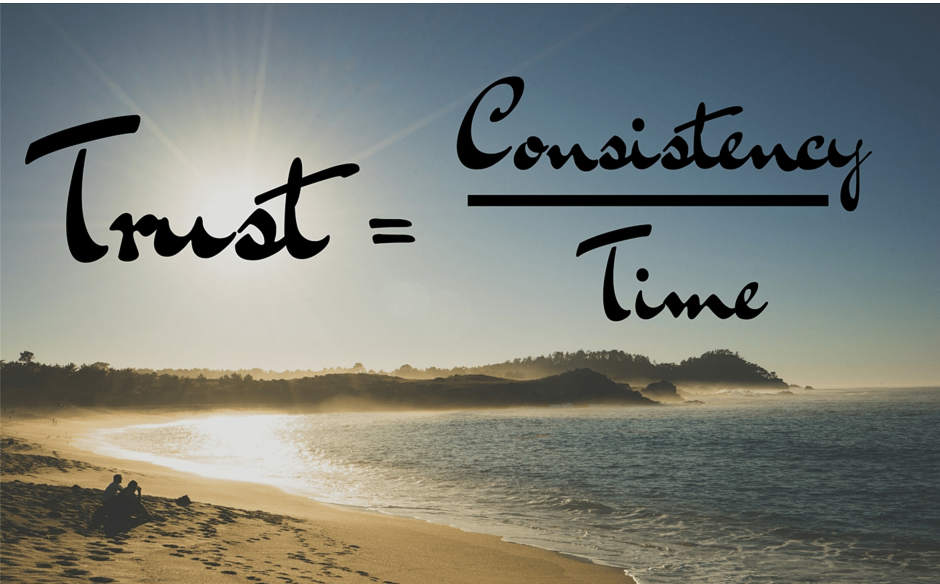
Consistency Is a Form of Trust
We give motivation way too much credit.
We love the big moment — the bold announcement, the new job, the launch day. It feels like the whole story. But here’s the truth: life doesn’t really change in that one moment. It changes in everything that happens after it, when nobody’s watching and the excitement has worn off.
That’s the hard part. And that’s exactly where consistency takes over.
Motivation gets you started. Consistency tells people who you actually are.
Motivation Is a Feeling. Consistency Is a Choice.
Motivation feels great, but you can’t count on it. Some days you wake up ready to take on the world. Other days, just getting through feels like a win. Careers, relationships, leadership, reinvention — none of it runs on inspiration alone. If you only show up when you feel like it, you end up at the mercy of your own moods.
Consistency asks a totally different question. Not “how motivated do I feel today?” but “what did I say I’d do?”
That shift matters, because every time you follow through, you’re not just building a habit — you’re building trust.
The Ordinary Days Are Where It’s Really Built
I learned this from soccer. People remember the spectacular goal or the dramatic save, but games are actually won through the unglamorous stuff — tracking back, making the simple pass, holding your position, covering for a teammate, running hard when nobody’s watching. Just doing the job, over and over.
Careers work the same way. We remember the promotions and the big wins, but a career is really built in the thousands of forgettable days in between — the call you made, the promise you kept, the person you helped, the hour you spent learning something you didn’t know. Sometimes it’s simply showing up even when things didn’t go your way.
This matters even more in the second half of life or career, because reinvention almost never happens as one dramatic leap. It’s a string of small, gutsy steps taken again and again in a new direction.
Consistency Compounds
We get compounding when it comes to money. We’re starting to get it with knowledge, too. But there’s another kind that deserves way more attention: relationship capital.
Every interaction is either a small deposit or a small withdrawal.
Did you make that call you said you would? Did you follow through on the introduction you promised? When someone helped you out, did you show up for them later? When you told your team you had their back, did they actually feel it when things got tough?
None of these moments feel like much in the moment. But they add up over years. And eventually, people reach a quiet conclusion about you: I can count on this person. That might be one of the most valuable things you can ever accumulate.
Trust Is Something You Can See
We talk about trust like it’s a feeling. I think it’s actually a pattern of behavior.
People don’t trust leaders because of one great speech — they trust them because their words and actions line up, again and again. Employees don’t feel valued because of one inspiring meeting — they feel valued when they’re listened to and supported consistently. Customers don’t stick around because of one great sales pitch — they stay because what happens after the sale matches what was promised before it.
Relationships are no different. They’re not built on grand gestures. They’re built on small, repeated signals: I see you. I hear you. I remember. I showed up. I did what I said I would.
That’s consistency — and it’s what earns credibility.
Why This Matters Even More in an AI World
AI is speeding everything up — how fast we communicate, create, sell, decide. Speed and information are becoming cheap and abundant. But trust isn’t getting any more common. If anything, it’s getting rarer.
Which makes human consistency more valuable, not less.
Technology can remind you to follow up. It can even draft the message or suggest what to say next. But it can’t fake your intention for you. People can tell the difference between automated attention and someone genuinely showing up.
In a world getting more automated by the day, one of the biggest advantages we still have is simple: be the person who actually shows up, consistently.
Forget Perfection. Aim for Repeatable.
Consistency isn’t about being perfect. You’ll have bad days. You’ll lose momentum. You’ll break a promise here and there and second-guess your direction. Sometimes just staying in the game is the win — especially during a transition.
It looks like small stuff: making the call you wanted to avoid, writing the page, taking the meeting, checking in on someone, learning the skill, keeping the promise.
Do the next thing. Then do it again. Because the careers, businesses, relationships, and lives that actually mean something aren’t built on bursts of motivation — they’re built on ordinary consistency, repeated until it becomes character. Character, repeated long enough, becomes reputation. And reputation, repeated long enough, becomes trust.
The Real Advantage
For a long time, I thought growth was mostly about landing the right opportunity. I’ve since learned it’s really about what happens between opportunities — the relationships you keep up even when there’s nothing to sell.
It’s the promises kept when nobody’s measuring. The people you support when there’s nothing to gain. The work you keep doing after the excitement fades.
That’s true in business, in leadership, in the second half of a career, and in every relationship that actually matters.
Motivation starts the journey. Consistency builds the reputation. And trust is what compounds the return — quietly, over a lifetime, into something powerful.