
Midlife is often portrayed as a plateau — a stage where professional growth stabilizes and ambition softens into routine. In reality, midlife can be a powerful inflection point. By this stage, individuals possess accumulated technical expertise, industry exposure, and lived experience. What determines whether these assets translate into accelerated growth or quiet stagnation is rarely IQ, credentials, or raw talent. It is emotional intelligence (EI).
Emotional intelligence functions as a career multiplier in midlife because it amplifies the value of everything already acquired — knowledge, networks, authority, and perspective.
Understanding Emotional Intelligence Beyond the Buzzword
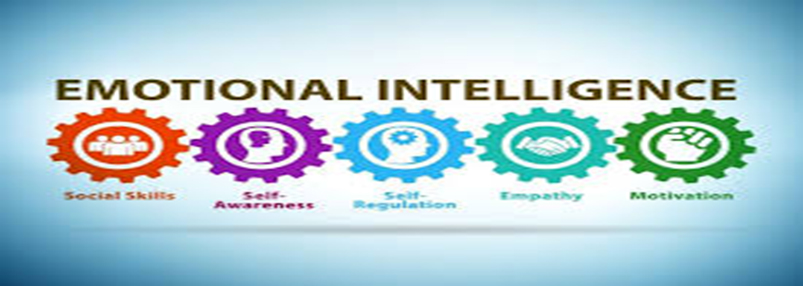
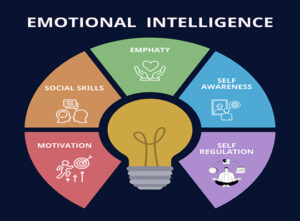
Emotional intelligence is the capacity to recognize, regulate, and effectively utilize emotions — both your own and others’. It is commonly broken into five domains:
- Self-awareness – Understanding your emotional triggers, strengths, blind spots, and motivations.
- Self-regulation – Managing impulses, stress responses, and reactions under pressure.
- Motivation – Sustaining internal drive beyond external rewards.
- Empathy – Accurately perceiving others’ emotional states and perspectives.
- Social skill – Building influence, managing conflict, and fostering collaboration.
In early career stages, performance often hinges on technical execution. In midlife, career progression increasingly depends on influence, leadership, adaptability, and trust — all of which are rooted in emotional intelligence.
Why Emotional Intelligence Becomes Critical in Midlife
1. Leadership Transitions
Many professionals in midlife transition into leadership, advisory, or strategic roles. These positions demand more than expertise. They require the ability to manage personalities, navigate organizational politics, and make decisions that balance logic with human impact.
A technically brilliant manager who lacks empathy may struggle to retain talent. A seasoned executive who cannot regulate frustration may erode psychological safety within teams. Emotional intelligence ensures that authority strengthens relationships rather than undermines them.
2. Navigating Career Plateaus
Midlife often brings a career plateau — not necessarily in income, but in perceived growth. Emotional intelligence helps professionals reinterpret plateaus as strategic pauses. Self-awareness allows them to identify stagnation triggers. Self-regulation prevents reactive decisions driven by ego or comparison.
Rather than chasing titles impulsively, emotionally intelligent professionals recalibrate toward purpose, autonomy, or mentorship.
3. Intergenerational Collaboration
Workplaces today are multigenerational ecosystems. Midlife professionals frequently collaborate with both younger digital-native employees and senior legacy leaders. Emotional intelligence enables translation across generational values, communication styles, and work expectations.
Empathy fosters credibility with younger teams, while social skill preserves respect with senior stakeholders.
4. Managing Change and Uncertainty
Technological disruption, restructuring, and evolving industry standards disproportionately affect mid-career professionals. Emotional intelligence mitigates fear-based resistance.
Self-awareness identifies internal anxieties about relevance. Self-regulation stabilizes decision-making during uncertainty. Motivation sustains learning agility. Instead of resisting change, emotionally intelligent professionals reposition themselves within it.
Emotional Intelligence as a Performance Multiplier
Technical competence adds value linearly. Emotional intelligence multiplies value exponentially.
For example:
- A skilled engineer with high EI not only solves problems but aligns cross-functional teams to implement solutions efficiently.
- A domain expert with empathy builds client loyalty beyond transactional engagement.
- A manager with strong self-regulation reduces team burnout, indirectly improving productivity.
In midlife, the professional differentiator is no longer “Can you do the work?” but “Can others thrive because you are in the room?”
The Psychological Shift in Midlife
Midlife often triggers introspection. Questions of meaning, legacy, and identity surface. Emotional intelligence helps professionals navigate this psychological transition constructively rather than defensively.
Those with high EI are more likely to:
- Redefine success beyond status
- Invest in mentorship and legacy-building
- Shift from competition to contribution
- Balance ambition with well-being
This shift enhances career sustainability. Burnout decreases. Strategic clarity improves. Decision-making becomes values-aligned rather than fear-driven.
Developing Emotional Intelligence in Midlife
Unlike cognitive intelligence, emotional intelligence is highly trainable at any stage of life. Development involves deliberate practice:
- Structured reflection: Regular journaling to identify emotional patterns in professional interactions.
- Feedback calibration: Seeking candid input from peers and subordinates to uncover blind spots.
- Response auditing: Analyzing moments of conflict or stress to improve future regulation.
- Empathy expansion: Practicing active listening without premature judgment.
- Conflict reframing: Viewing disagreement as information rather than threat.
Midlife provides a unique advantage: a wealth of past experiences to analyze and learn from.
Organizational Implications
Organizations that undervalue emotional intelligence risk losing midlife talent to disengagement. Companies that cultivate EI through leadership training, coaching, and psychological safety unlock disproportionate returns.
Emotionally intelligent midlife professionals stabilize teams, mentor emerging leaders, and maintain cultural continuity during transition periods. They are often the invisible infrastructure behind resilient organizations.
The Strategic Advantage
In competitive industries, technical skills eventually commoditize. What remains rare is composure under pressure, empathy in negotiation, and clarity in crisis. Emotional intelligence is not a soft skill; it is a strategic asset.
Midlife professionals who invest in EI development do not merely extend their careers — they elevate them. Influence deepens. Relationships compound. Legacy becomes intentional.
Emotional intelligence, therefore, is not just a personal growth tool. It is the multiplier that transforms experience into impact.