
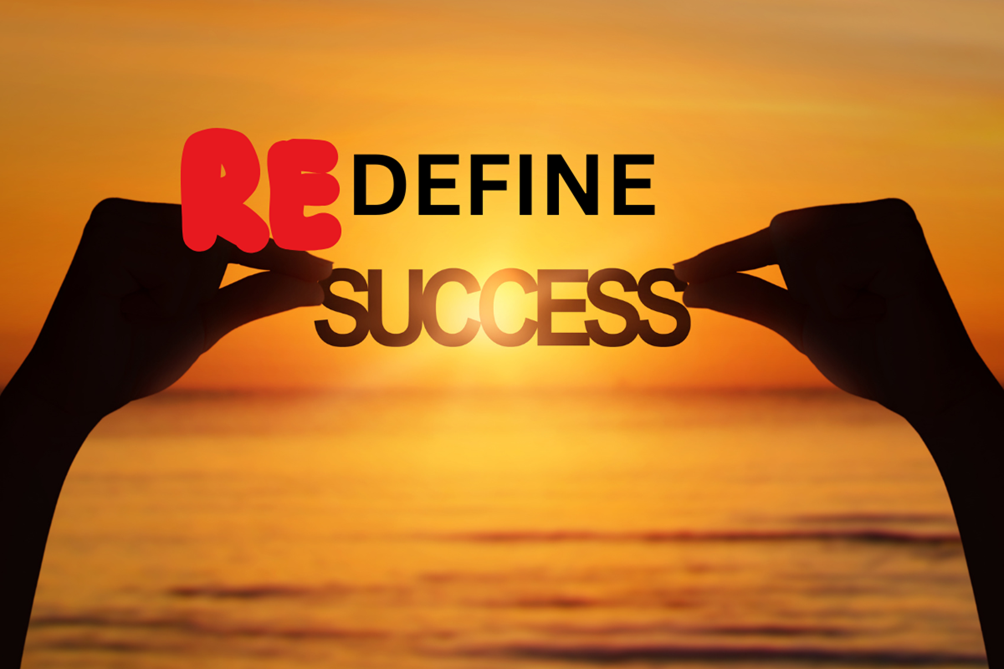
In the first half of life, success is often defined by accumulation—degrees earned, promotions secured, income increased, and social status elevated. It is a period driven by ambition, competition, and measurable milestones. Society reinforces this trajectory, rewarding productivity, speed, and outward achievement. Yet, as individuals move into the second half of life, many begin to sense a quiet but persistent shift: the metrics that once defined success start to feel incomplete.
This transition is not a failure of ambition—it is an evolution of perspective.
The Turning Point: When Achievement Feels Insufficient
For many, the realization begins subtly. A long-awaited promotion arrives, but the satisfaction fades faster than expected. Financial stability is achieved, yet a sense of restlessness lingers. Goals that once felt urgent no longer carry the same emotional weight.
This phase is often misunderstood as a crisis, but it is more accurately a recalibration. The external benchmarks of success—titles, possessions, recognition—lose their dominance, making room for deeper questions:
- Is this meaningful?
- Does this align with who I truly am?
- What impact am I leaving behind?
These questions signal the beginning of a shift from achievement to meaning.
Redefining Success: From External to Internal Metrics
In the second half of life, success becomes less about what you have and more about who you are becoming. The focus moves inward, guided by values rather than validation.
Key elements of this redefinition include:
- Purpose Over Performance
Instead of chasing outcomes, individuals begin to seek purpose. Work is no longer just about productivity—it becomes a vehicle for contribution. Whether through mentoring, teaching, creating, or serving, the emphasis shifts to impact. - Depth Over Breadth
Earlier, success may have meant taking on more projects, assuming more responsibilities, and achieving more. Later, it becomes intentional, doing fewer things with greater depth and intention. - Authenticity Over Approval
There is a growing willingness to let go of societal expectations. Decisions are no longer driven by “what looks good” but by “what feels right.” - Legacy Over Recognition
Recognition is temporary; legacy endures. The second half of life invites individuals to reflect on what they will leave behind, not just materially, but also in terms of influence, relationships, and values passed on.
The Role of Experience: Turning Wisdom into Direction
One of the greatest advantages of the second half of life is accumulated experience. Unlike earlier years, decisions are no longer made from theory but from lived understanding.
Mistakes, failures, and detours—once seen as setbacks—become valuable data points. They refine judgment, strengthen resilience, and provide clarity about what truly matters.
This stage allows individuals to:
- Prioritize effectively
- Recognize what is worth pursuing and what is not
- Aligning actions with long-term meaning rather than short-term gain
Experience transforms into wisdom when it is reflected upon and consciously applied.
Letting Go: The Hidden Requirement for Meaning
Redefining success requires subtraction as much as addition. It involves letting go of outdated definitions, unrealistic expectations, and identities that no longer serve growth.
This might include:
- Stepping away from roles that no longer feel aligned
- Releasing the need for constant validation
- Accepting that not all goals need to be achieved
Letting go is not about loss—it is about making space. Space for clarity, fulfillment, and intentional living.
Relationships as a Measure of Success
In the pursuit-driven years, relationships are often secondary to goals. In the second half of life, this hierarchy reverses.
Meaning is increasingly found in:
- Deep, authentic connections
- Time spent with family and close friends
- Conversations that matter
- Shared experiences rather than individual accomplishments
Success becomes more relational than transactional.
Contribution: The Core of Lasting Fulfillment
A defining characteristic of this phase is the desire to contribute. This does not necessarily mean large-scale achievements—it often manifests in small, consistent acts that create value for others.
Contribution can take many forms:
- Mentoring younger professionals
- Sharing knowledge and skills
- Supporting community initiatives
- Creating something that outlasts the individual
The shift is from “What can I get?” to “What can I give?”
This transition is critical because contribution generates a sense of significance that achievement alone cannot provide.
Embracing Change Without Fear
One of the biggest barriers to redefining success is the fear of starting over, losing status, and facing uncertainty.
However, the second half of life is not about starting from scratch; it is about starting from experience. The foundation built in earlier years becomes a platform for meaningful transformation.
Change, when guided by clarity and intention, becomes less risky and more purposeful.
A New Definition of Success
Ultimately, success in the second half of life can be defined as:
- Living in alignment with your values
- Engaging in work that feels meaningful
- Building and maintaining deep relationships
- Contributing positively to others
- Experiencing a sense of inner fulfillment
It is quieter, less visible, but far more enduring.