

In today’s hyper-competitive world, success is often measured in visible metrics—titles, income, influence, and recognition. While these markers are meaningful, they represent only one dimension of achievement. A growing number of leaders, entrepreneurs, and professionals are now shifting their focus from success to significance. This transition reflects a deeper, more enduring aspiration: to create value that outlives personal gain and contributes meaningfully to others.
This is where thought leadership plays a critical role. It bridges the gap between individual accomplishment and collective impact.
Understanding Success vs. Significance
Success is typically external. It is defined by outcomes that can be quantified—career milestones, financial stability, and social status. It is often driven by ambition, discipline, and strategic decision-making.
Significance, on the other hand, is internal and relational. It is defined by the difference one makes in the lives of others. It is less about accumulation and more about contribution. While success answers the question, “What have I achieved?”, significance asks, “Who has benefited from my journey?”
The distinction is subtle but transformative. Success can exist without significance, but significance rarely exists without a foundation of success.
The Evolution of a Thought Leader
A thought leader does not simply accumulate expertise—they translate it into insight, perspective, and influence that shapes others. The evolution from success to significance often follows three stages:
1. Mastery
At this stage, individuals focus on building competence and credibility. They acquire skills, deliver results, and establish themselves in their domain.
2. Influence
Once mastery is achieved, the next step is sharing knowledge. This may involve mentoring, writing, speaking, or contributing to industry conversations. Influence expands reach beyond personal success.
3. Legacy
The final stage is significance. Here, the focus shifts from personal recognition to lasting impact—creating systems, ideas, or communities that continue to generate value even in one’s absence.
Why the Shift Matters Today
The modern professional landscape is changing rapidly. Automation, AI, and globalization are redefining traditional career paths. In such an environment, transactional success is increasingly fragile. What endures is the ability to create meaningful impact.
Organizations are also prioritizing leaders who demonstrate purpose-driven thinking. Customers, employees, and stakeholders are drawn to authenticity and long-term value creation rather than short-term wins.
Thought leadership rooted in significance fosters trust, builds stronger communities, and drives sustainable growth.
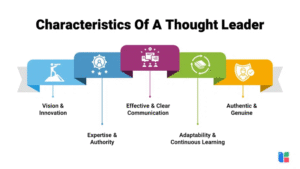
Characteristics of Significance-Driven Leaders
Purpose-Oriented Thinking
They operate with a clear sense of why. Their decisions are guided not only by profit or efficiency but by long-term contribution.
Value Creation Over Value Capture
Instead of focusing solely on what they can gain, they prioritize what they can give—knowledge, opportunities, and empowerment.
Long-Term Vision
They think beyond immediate outcomes and invest in initiatives that create enduring impact.
Mentorship and Empowerment
They actively uplift others, recognizing that true influence multiplies through people.
Practical Steps to Move Toward Significance
1. Redefine Personal Metrics
Shift from measuring success purely in terms of income or titles to evaluating impact—how many people you’ve helped, influenced, or inspired.
2. Share What You Know
Document your insights through articles, videos, or teaching. Knowledge becomes significant only when it is shared.
3. Build Systems, Not Just Results
Instead of focusing on one-time achievements, create frameworks, processes, or communities that sustain value over time.
4. Invest in People
Mentorship is one of the most direct paths to significance. Helping others grow amplifies your impact exponentially.
5. Align Work with Purpose
Identify areas where your skills intersect with societal or organizational needs. This alignment creates both fulfillment and impact.
Challenges in the Transition
Moving from success to significance is not without obstacles. It often requires letting go of ego-driven goals and embracing a broader perspective. The rewards are less immediate and harder to quantify.
Additionally, significance demands consistency. It is not achieved through isolated actions but through sustained effort and intentionality.
Conclusion
Success is a milestone; significance is a legacy. While success validates capability, significance defines purpose. In a world increasingly driven by complexity and change, thought leadership anchored in significance offers a path toward meaningful and lasting impact.
The real question is not whether one can achieve success—it is whether that success will matter beyond oneself. True leadership begins when personal achievement evolves into collective advancement.
Ultimately, the transition from success to significance is not a departure from ambition, but its highest expression.