

There comes a point in life when the question quietly shifts from “What can I achieve?” to “What truly matters?” For many, this transition begins somewhere in midlife—a phase often misunderstood as decline, but in reality, it holds the potential for the most meaningful transformation. The idea of a “second half” of life is not about slowing down; it is about recalibrating.
Imagine encountering a book that doesn’t just inspire you temporarily but fundamentally alters how you see your remaining years. Such a book doesn’t offer quick success formulas or superficial motivation. Instead, it challenges deeply held assumptions about ambition, identity, and fulfillment.
Breaking the Myth of Linear Success
From a young age, we are conditioned to believe in a linear life path: education, career, achievements, stability, and eventually retirement. Success is often defined by external markers—titles, income, recognition. But this model has limitations. It prioritizes accumulation over reflection and productivity over purpose.
The “book that changes everything” disrupts this narrative. It argues that the first half of life is primarily about building skills, identity, and social standing—while the second half is about understanding meaning, contribution, and inner alignment. This shift is not automatic; it requires conscious awareness.
The Turning Point: From Doing to Being
In the first half of life, action dominates. We strive, compete, and prove ourselves. However, the second half invites a different mode of existence—one that emphasizes being over doing. This does not imply inactivity but rather a deeper intentionality behind actions.
The book reframes success as internal coherence instead of external validation. It encourages readers to ask questions like:
- Am I living according to my values?
- What impact do I want to leave behind?
- What brings genuine fulfillment beyond achievement?
These questions often lead to uncomfortable realizations, but they are essential for transformation.
Redefining Purpose
Purpose in the second half of life evolves from self-centered goals to contribution-driven intentions. Earlier, purpose might have meant climbing the ladder; now, it may mean helping others climb theirs.
This shift can manifest in many ways:
- Mentorship and knowledge sharing
- Creative pursuits long postponed
- Community involvement or social impact
- Spiritual or philosophical exploration
The book emphasizes that purpose is not something you find once—it is something you continually refine.
Letting Go as a Skill
One of the most powerful ideas presented is the importance of letting go. Letting go of outdated ambitions, rigid identities, and societal expectations is not a loss—it is a liberation.
In the first half, we accumulate. In the second half, we edit.
This process allows space for authenticity. When you are no longer driven by the need to prove yourself, you begin to live more truthfully. The book positions this as the gateway to a richer, more integrated life experience.
Embracing Uncertainty
Another key insight is the acceptance of uncertainty. The second half of life often comes with unpredictability—career shifts, changing relationships, health concerns. Instead of resisting this uncertainty, the book suggests embracing it as a catalyst for growth.
This mindset transforms fear into curiosity. Rather than asking, “What if things go wrong?” you begin to ask, “What can I learn from this?”
The Integration of Life Experiences
Unlike the first half, where experiences are often fragmented and goal-oriented, the second half allows for integration. Successes, failures, joys, and regrets all become part of a cohesive narrative.
The book encourages readers to reinterpret their past—not as a series of isolated events, but as a meaningful journey that has prepared them for deeper understanding. This integration fosters wisdom, which becomes a defining asset in the later stages of life.
A New Definition of Success
Ultimately, the book redefines success in a profound way. Success is no longer about accumulation or comparison; it is about alignment and impact.
A successful second half of life might look like:
- Living with clarity and intention
- Building meaningful relationships
- Contributing to something larger than oneself
- Experiencing inner peace and contentment
This redefinition is both freeing and demanding. It requires honesty, courage, and a willingness to change.
Conclusion
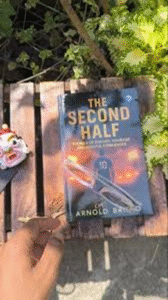
“The Book That Changes Everything” is not a literal title it represents a category of thought, a perspective that shifts how we approach life’s later chapters. It challenges the idea that our most important years are behind us and instead positions the second half as the most significant phase of all.
Rethinking life’s second half is not about abandoning ambition; it is about refining it. It is about moving from external success to internal significance. And for those willing to embrace this shift, the second half of life does not diminish it deepens.